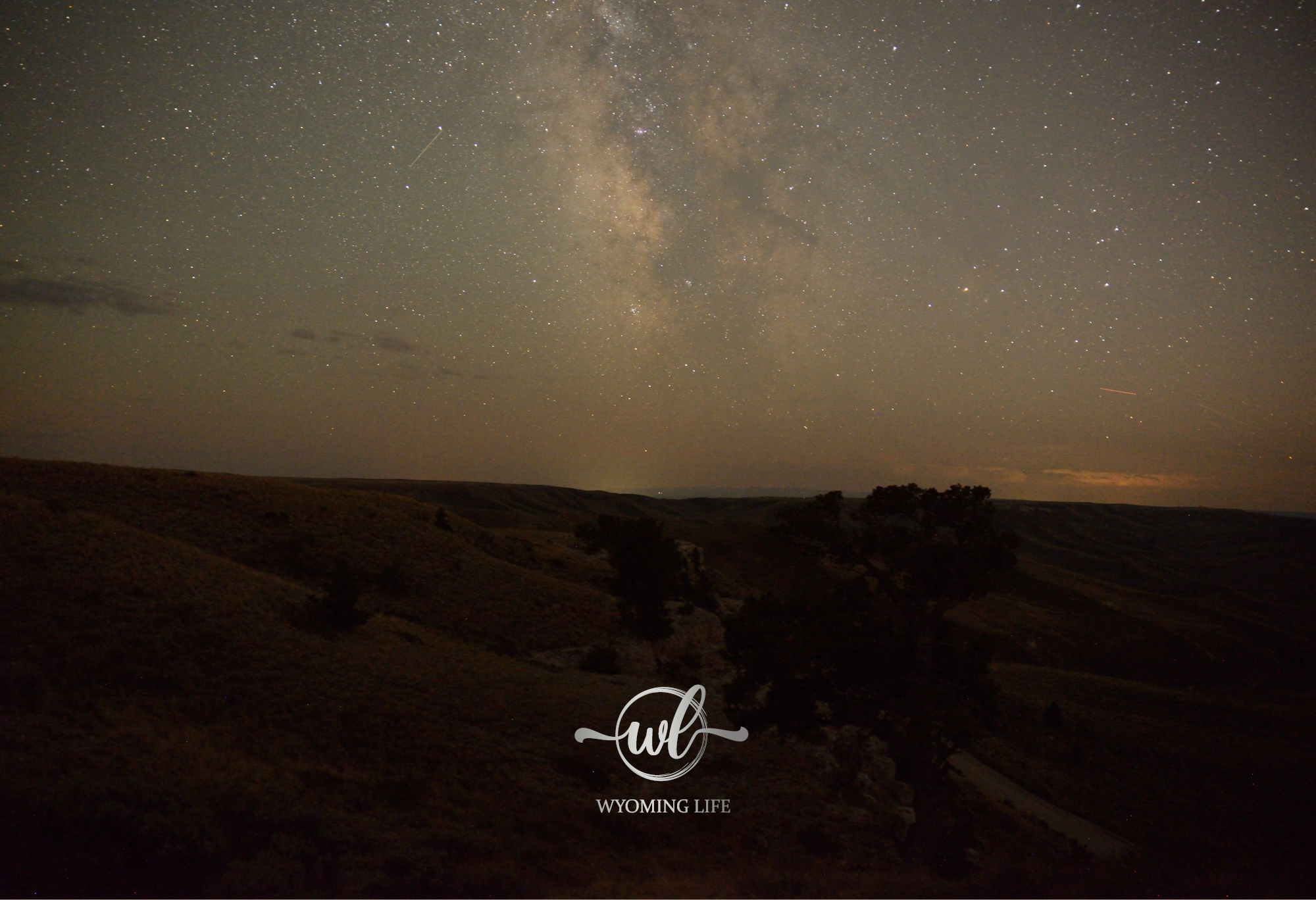
This is my first attempt at photographing the Milky Way. I had no idea what settings would work best on my camera, but with a how-to book, my camera gear, a 4WD, and my dog, I set out to find a suitable place to film the Milky Way.
Milky Way season is coming to a close here in Wyoming, so I thought I would give it a try without any heavy expectations. My goal was just to learn more about how to photograph the night sky. I realize the “perfect” shot can take years of planning- not to mention luck, so I was pretty happy with the results in these raw photos. It is more accurate to say I was trying to photograph the edge view of the Milky Way, since earth is IN the Milky Way, but I’ll use the common vernacular.

After a little cursory research I learned that there are quite a few pieces to this endeavor. Knowing where the Milky Way would be visible in the night sky is the first step. That changes through the year and is different in northern and southern hemispheres. The Milky Way itself is always visible, but most photographers are trying to get the galactic core, or the brightest spot, in the shot. It’s best to photograph during a new moon, and of course clear skies are needed. I used Photo Pills to know where the Milky Way would appear in the sky (for my location), when the new moon phases are, and where the galactic center would be in comparison to the horizon.
My modest rookie luck should be credited to Wyoming’s beautiful, light-pollution-free night skies. On this first shot I just tried to find a place where I could get up on a ridge and have the best chance of seeing the galactic core without any obstruction. With Wyoming’s thirty million acres of public land, I had plenty of choices.
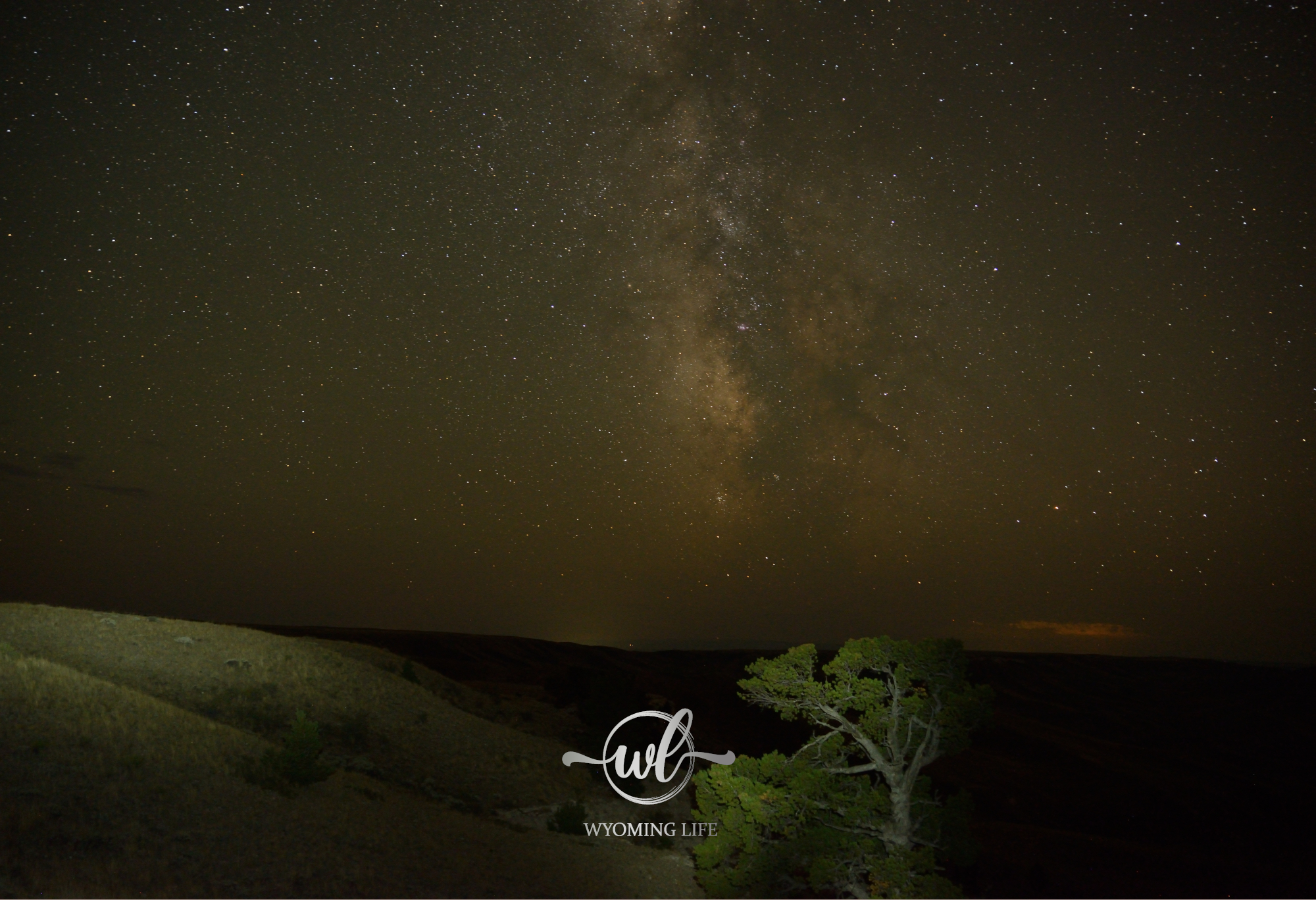
My next assignment is to identify some good foreground subjects and head back out on a dark, clear night.
 Wyoming Life
Beautiful !!